How Do Vibration Motor Driver ICs Power Smartphone Vibrations

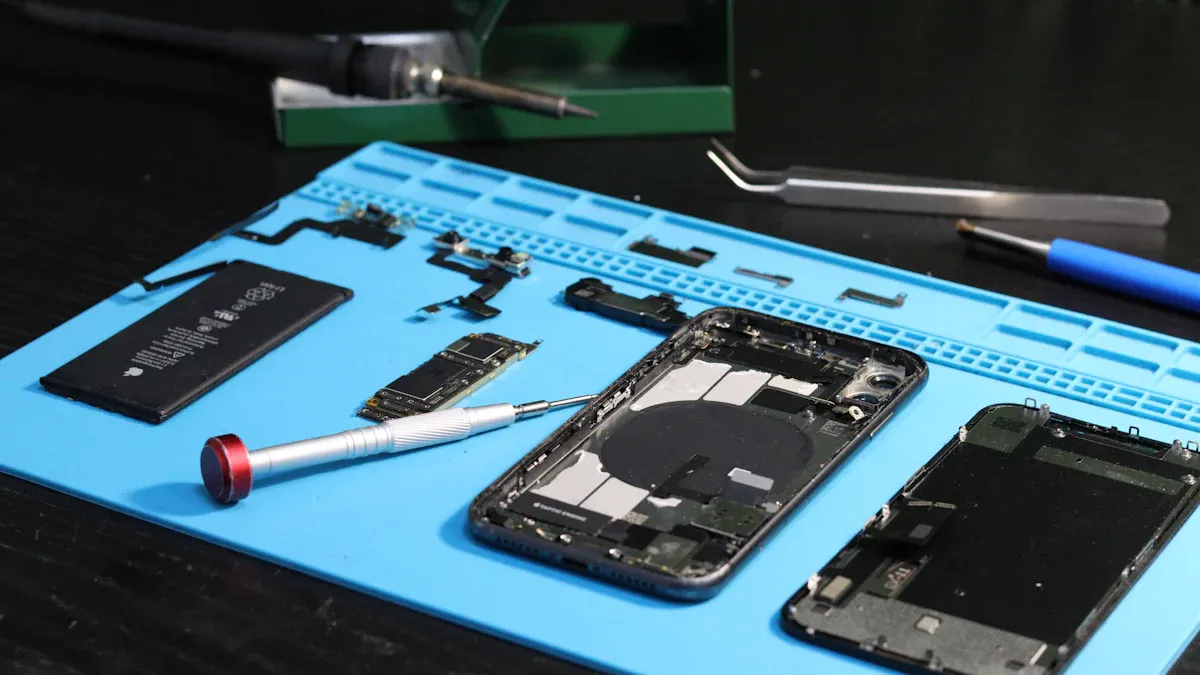
You feel every tap and buzz on your smartphone because vibration motor driver ICs turn digital signals into real touch sensations. These smart chips send precise electrical currents to haptic actuators, creating the tactile feedback you rely on. INEED stands out as a trusted provider of advanced vibration motors. Picking the right driver IC matters for the best haptic response. If you want a vibration motor driver IC recommendation for smartphone projects, understanding this technology will help you make the best choice.
Key Takeaways
Vibration motor driver ICs convert digital signals into tactile sensations, enhancing user interaction with smartphones.
Choosing the right driver IC is crucial for optimal haptic feedback, ensuring a responsive and satisfying user experience.
INEED offers advanced vibration motors that provide energy efficiency, durability, and customizable haptic patterns for various applications.
Understanding the differences between ERM and LRA motors helps you select the best technology for your device's vibration needs.
Integrating the correct driver IC with your vibration motor maximizes performance and improves user satisfaction.
Vibration Motor Driver ICs in Smartphones
What Is a Vibration Motor Driver IC
You interact with your smartphone every day, but you may not realize what makes it vibrate when you receive a call or touch the screen. A vibration motor driver IC is a small chip that controls the vibration motor inside your device. This chip takes digital signals from your phone’s processor and turns them into electrical energy that powers the vibration motor. You feel the result as a buzz or tap, which gives you important feedback without making a sound.
Vibration motor driver ICs stand out from other motor drivers used in consumer electronics. They focus on power efficiency, compact size, and precise control. These features matter because your smartphone needs to save battery life and fit many components into a small space. The table below shows how vibration motor driver ICs compare to other types of motor drivers:
Evaluation Criteria | Description |
|---|---|
Power Efficiency | Minimizes energy use during operation, essential for battery-powered devices. |
Size & Form Factor | Compact designs enable integration into small devices like wearables. |
Driving Capabilities | Handles various vibration intensities and frequencies for different use-cases. |
Thermal Management | Effective dissipation to prevent overheating during prolonged use. |
Compatibility & Integration | Ease of integration with existing hardware and software ecosystems. |
Reliability & Longevity | Resistance to wear and environmental factors for consistent performance. |
Cost & Supply Chain | Competitive pricing and stable supply channels to meet production demands. |
Vendor Support & Documentation | Availability of technical support, datasheets, and development tools. |
Core Components and Functions
You can think of a vibration motor driver IC as the brain behind the buzz. It includes several key parts that work together to create smooth and reliable haptic feedback. The main components are:
Key Component | Description |
|---|---|
I2C-based interface | Allows control of both ERM and LRA motors. |
PWM waveform generation | Generates its own PWM waveforms, reducing the need for host microcontroller. |
Library of haptic patterns | Includes 123 licensed haptic patterns for easy implementation of effects. |
The I2C-based interface lets your smartphone communicate with the driver IC easily. The PWM waveform generation means the chip can create the right signals for the motor without extra help from the main processor. The built-in library of haptic patterns gives you a variety of vibration effects, making your device feel more interactive and responsive.
Tip: When you choose a vibration motor driver IC, look for one with these features to ensure your smartphone delivers the best possible tactile experience.
Types of Vibration Motors and INEED Solutions
ERM and LRA Vibration Motors
You will find two main types of vibration motor technology in smartphones and wearables: Eccentric Rotating Mass (ERM) motors and Linear Resonant Actuators (LRA). Each type has unique features that affect how your device feels when it vibrates.
ERM Motors | LRA Motors | |
|---|---|---|
Power Consumption | Typically consume more power due to rotational motion | More efficient, consumes less power with linear oscillation |
Vibration Range | Delivers a wider range of vibrations due to rotating eccentric mass | Provides finer control but limited to specific frequency range |
Response Time | Exhibits faster response times upon activation | Longer-lasting oscillating mechanism for durability |
Noise Level | Tends to produce more noise and transmits vibrations | Produces smoother vibrations with minimal noise |
ERM motors use a spinning weight to create vibrations. You will notice these in many older phone vibration motors because they are simple and reliable. However, they often use more power and make more noise. LRA motors, on the other hand, use a moving mass that vibrates back and forth. This design gives you faster, quieter, and more precise haptic feedback. Many modern smartphones and wearables now use LRA technology for a better user experience.
Motor Type | Common Applications | Notes |
|---|---|---|
ERM | Smartphones, Wearables | Standard in many devices |
LRA | Smartphones, Wearables | Offers faster response times and efficient power usage |
You will see LRA motors in high-end devices because they deliver rapid haptic feedback and save battery life. For example, Apple’s Taptic Engine uses LRA technology, which has set a new standard for phone vibration motors.
Note: LRAs have become the preferred choice for phone vibration motors in smartphones and wearables due to their quick response and energy efficiency.
INEED LRA Motor LRA2024A-1088F
If you want a top-performing vibration motor for your device, the INEED LRA2024A-1088F stands out. This motor offers a wide frequency range and strong, comfortable vibrations. You can use it in smartphones, gaming controllers, and VR systems to create immersive haptic feedback.
Specification | Value |
|---|---|
Model | LRA2024A-1088F |
Motor Size (mm) | 20.0 |
Rated Voltage | 1.2 Vrms |
Rated Frequency | 65±10 Hz |
Rated Current | 200mA Max |
Rise Time | Max 55ms |
Falling Time | Max 80ms |
Direction of Vibration | Z axis |
Acceleration F0 | 1.2 Min |
Operating Voltage | 0.1~1.2 V |
You will benefit from its ultra-comfortable resonant frequency of 65Hz, which matches the sensitivity of human touch. The LRA2024A-1088F can produce strong vibrations across a wide frequency band, from 30Hz to 500Hz. This means you can create a variety of tactile sensations for different alerts or gaming effects. The motor responds quickly, with rise times under 55 milliseconds, so you feel every tap or buzz right away.
Ultra-wideband capability lets you design richer haptic experiences.
Precision and speed help you synchronize vibrations with sound or visual effects.
The motor’s durability ensures it lasts through daily use in your device.
INEED Linear Magnetic Haptic Actuator MAG1020BEL40
You may also consider the INEED MAG1020BEL40 if you need a vibration motor with magnetic levitation technology. This actuator uses a frictionless design, which means less wear and a longer lifespan. It is perfect for devices that need strong, fast, and reliable haptic feedback.
Feature | INEED LRA2024A-1088F | MAG1020BEL40 |
|---|---|---|
Frequency Range | 30Hz to 500Hz | 50Hz to 200Hz |
Rise Time | 55 milliseconds | 35 milliseconds |
Fall Time | 80 milliseconds | 50 milliseconds |
Vibration Strength | Strong and varied | Excellent response |
Application Suitability | Gaming, VR, Automotive | High-speed gaming |
Parameter | Value |
|---|---|
Model | MAG1020BEL40 |
Motor Size (mm) | 10 |
Rated Voltage | 1.2 Vrms |
Frequency | 60±10 Hz |
Rated Current | 150 mA Max |
Rise Time | Max 35 msec |
Falling Time | Max 50 msec |
Direction of Vibration | Z axis |
Acceleration F0 | 2.0±0.5 Gp-p |
Operating Voltage | 0.1-1.25 |
Lifetime | 1.2 million cycles |
You will notice the MAG1020BEL40 starts vibrating in just 35 milliseconds and stops in 50 milliseconds. Its vibration frequency range covers most haptic feedback needs in smartphones and gaming devices. The actuator can last up to 1.2 million cycles, making it a reliable choice for long-term use. Magnetic levitation keeps the operation quiet and maintenance-free, so you do not have to worry about extra care.
Magnetic levitation reduces friction and noise.
The actuator is easy to integrate with standard LRA drivers.
You get powerful, immersive sensations for gaming or touchscreens.
Customization and Application Scenarios
You can customize INEED vibration motors to fit your specific smartphone or wearable application. INEED offers tailored solutions, such as LRA haptic motors with steady frequency and low power consumption. If you need a compact design, coin vibration motors are a great choice for mobile phones because of their small size and enclosed mechanism.
INEED helps you select the right vibration motor for your device’s needs.
You can request custom vibration patterns, intensity, and mounting options.
The demand for high-end phone vibration motors is growing as users expect better haptic feedback.
Feature | INEED Vibration Motors | Competitors |
|---|---|---|
Energy Efficiency | Uses less power | Higher power usage |
Durability | Lasts over 1,000 hours | Shorter lifespan |
Haptic Feedback Quality | Customizable patterns | Limited feedback |
You will see the benefits of INEED vibration motors in both smartphones and wearables. These motors use less power, last longer, and let you create unique haptic feedback patterns. You can trust INEED to deliver reliable and efficient phone vibration motors that enhance the user experience in any device.
Tip: If you want to improve your device’s haptic feedback, choose INEED vibration motors for their energy efficiency, durability, and customization options.
How Driver ICs Control Haptic Feedback
Signal Conversion and Power Delivery
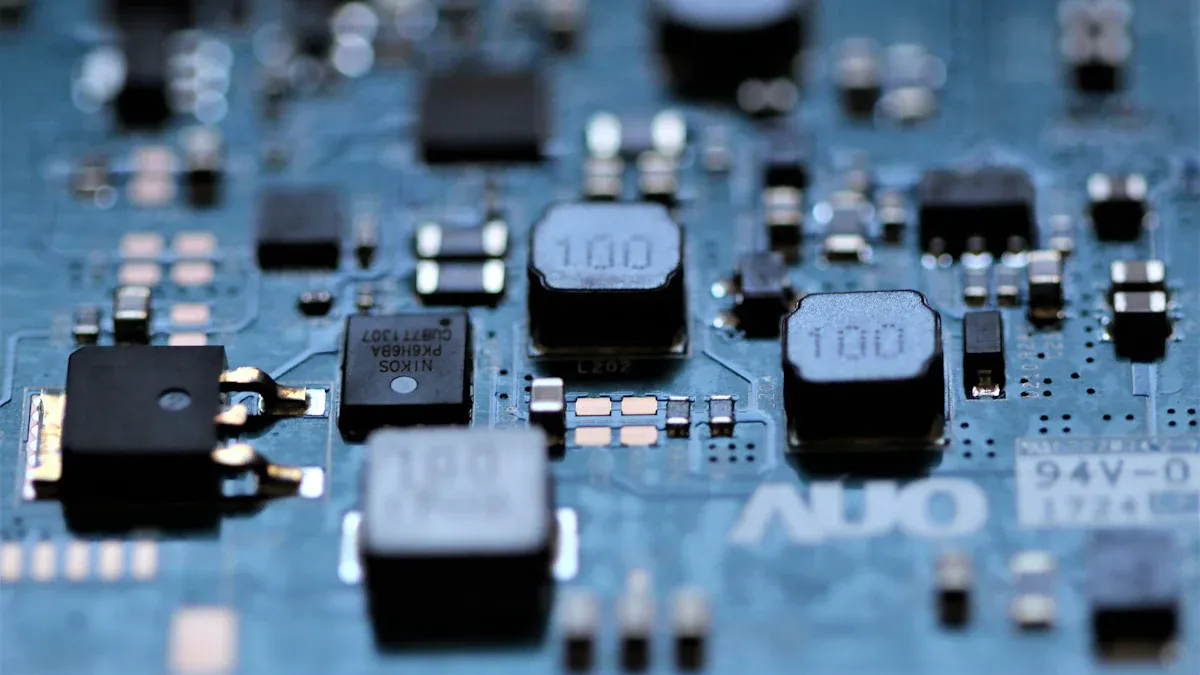
You interact with your smartphone every day, but you may wonder how vibrations are triggered when you touch the screen. The mobile haptic driver ic plays a key role in this process. When you tap or swipe, the device detects your input and sends a command to the mobile haptic driver ic. The chip translates this digital signal into an analog voltage that powers the vibration motor. This process creates the tactile sensation you feel.
Here is a simple breakdown of how vibrations are triggered in smartphones:
You touch the screen, and the device registers your action.
The software decides which haptic effect to use and sends instructions to the mobile haptic driver ic using protocols like I2C or SPI.
The mobile haptic driver ic processes the command and converts it into an analog signal.
The chip’s power amplifier boosts the signal, activating the vibration motor.
You feel the haptic feedback, which can change in strength or pattern depending on your action.
If your device supports it, the mobile haptic driver ic can adjust the vibration in real time based on your preferences or the environment.
This process ensures that every touch leads to a precise and reliable haptic response. The mobile haptic driver ic manages both the signal conversion and the power delivery, making sure the vibration motor receives the right amount of energy for each haptic effect.
Precision Control with PWM and Feedback
You expect your smartphone to deliver accurate haptic feedback every time you touch it. The mobile haptic driver ic achieves this precision using advanced control methods. Pulse-width modulation (PWM) is one of the most important techniques. PWM rapidly switches the power on and off, creating pulses that control how much energy reaches the vibration motor. By adjusting the width of these pulses, the mobile haptic driver ic can fine-tune the vibration’s intensity and duration.
Research shows that real-time voltage adjustments using PWM help stabilize the current and the sensation you feel. This stability is crucial for delivering consistent haptic feedback, especially in devices where you rely on touch for navigation or gaming.
The mobile haptic driver ic uses several feedback mechanisms to ensure accurate vibration output:
PWM controls the motor’s on-off states, allowing smooth changes in vibration intensity.
Variable voltage sources let the chip adjust the motor’s speed, which affects the frequency and amplitude of the haptic effect.
H-bridge circuits enable the motor to run in both directions, giving you more versatile haptic sensations.
These features allow the mobile haptic driver ic to create a wide range of haptic effects, from gentle taps to strong alerts. You get reliable and customizable haptic feedback every time you interact with your device.
Enhancing User Experience
You notice the difference when your smartphone responds instantly to your touch with precise haptic feedback. The mobile haptic driver ic makes this possible by synchronizing vibration effects with visual and audio cues. This coordination improves your engagement and helps you complete tasks more efficiently.
Haptic feedback gives you a positive experience by providing physical confirmation for actions like pressing buttons or receiving notifications.
You benefit from haptic feedback in several ways:
Typing on virtual keyboards feels more accurate because each key press triggers a subtle vibration.
Notifications become more memorable when accompanied by gentle haptic effects.
You experience even greater satisfaction when haptic effects match animations and sounds. This approach increases your interaction with the device and helps you finish tasks faster.
The mobile haptic driver ic ensures that every vibration is timely and matches your expectations. You enjoy a richer, more immersive experience every time you touch your smartphone.
Vibration Motor Driver IC Recommendation for Smartphone
Choosing the Right IC for INEED Motors
You want the best tactile feedback in your smartphone. You need a vibration motor driver ic recommendation for smartphone projects that matches your device’s needs. The right choice gives you reliable tactile sensations and extends the life of your device. INEED motors work well with industry-standard driver ICs. You can see how popular options compare in the table below:
Driver IC | Compatibility with INEED Motors | Performance Features |
|---|---|---|
TI DRV2604/2605 | Yes | Generates correct AC signals, feedback control |
awinic AW86223/AW86927 | Yes | Generates correct AC signals, feedback control |
You can use the TI DRV2604 or DRV2605 for precise tactile effects. These chips support both ERM and LRA motors. They offer advanced feedback control, which helps you create a consistent tactile experience. The awinic AW86223 and AW86927 also work well with INEED motors. They deliver accurate AC signals and support real-time feedback. You can trust these ICs for your vibration motor driver ic recommendation for smartphone applications.
Integration Tips for Optimal Haptic Feedback
You should always match the driver IC to the specific vibration motor in your smartphone. This step ensures the best tactile performance. When you match the IC and motor, you get proper impedance bridging. This process allows the signal to transfer efficiently. You will notice stronger and more accurate tactile feedback. Your users will enjoy a better experience with every touch.
You can follow these tips for the best results:
Check the datasheet for both the motor and the IC.
Test the vibration patterns in your device.
Adjust the drive voltage and frequency for your tactile needs.
Use feedback features to fine-tune the tactile response.
You will see that a good vibration motor driver ic recommendation for smartphone projects improves tactile feedback and user satisfaction. You can rely on INEED motors and compatible driver ICs to deliver a premium tactile experience in every device.
You rely on vibration motor driver ICs to power the tactile sensations in your smartphone. Choosing quality components like INEED vibration motors and the right driver IC improves reliability and responsiveness. The table below shows how these choices impact satisfaction:
Impact Area | Description |
|---|---|
User Satisfaction | Increased satisfaction and fewer navigation errors due to tactile cues. |
Accessibility | Tactile feedback helps users with visual impairments. |
Demand for Technology | More people want high-definition haptic feedback as screens become more versatile. |
HD haptic driver ICs create realistic gaming environments.
You feel more engaged and emotionally connected during gameplay.
Leading companies invest in these technologies for better interaction.
Precise control over haptic signals lets developers design new experiences, enhancing user experience in every device. Consider INEED for your smartphone and smart device vibration motor needs.
FAQ
What is a haptic driver in smartphones?
You use a haptic driver to control vibration motors in your smartphone. This chip turns digital signals into physical sensations. It helps you feel taps, alerts, and notifications, making your device more interactive and engaging.
How does a haptic driver improve haptic feedback quality?
You get better haptic feedback quality when your device uses an advanced haptic driver. This chip delivers precise vibrations. It lets you feel different effects for notifications, games, and touch actions, making your experience more realistic.
Why do notifications feel different on some phones?
You notice differences in notifications because each phone uses unique vibration motors and haptic driver settings. Some devices focus on haptic feedback quality, so you feel sharper or softer alerts based on the design.
Can I customize haptic feedback quality on my device?
You can adjust haptic feedback quality in your phone’s settings. Some smartphones let you change vibration strength for notifications or touch actions. This feature helps you match the feedback to your preference.
What should I consider when choosing a haptic driver?
You should check compatibility with your vibration motor and look for features that support strong haptic feedback quality. A good haptic driver ensures reliable performance for all notifications and touch interactions.
See Also
Understanding the Functionality of Vibration Motors in Haptics
Learn About 3V DC Motors and Their Vibration Mechanism
Steps to Verify the Vibration Feature on Your Phone
Get Custom Micro DC Motors from
INEED Motors!
Leading Brand in Vibration Motor Manufacturing Industry