Ensuring Stable G‑Level and Current Across Production Lots

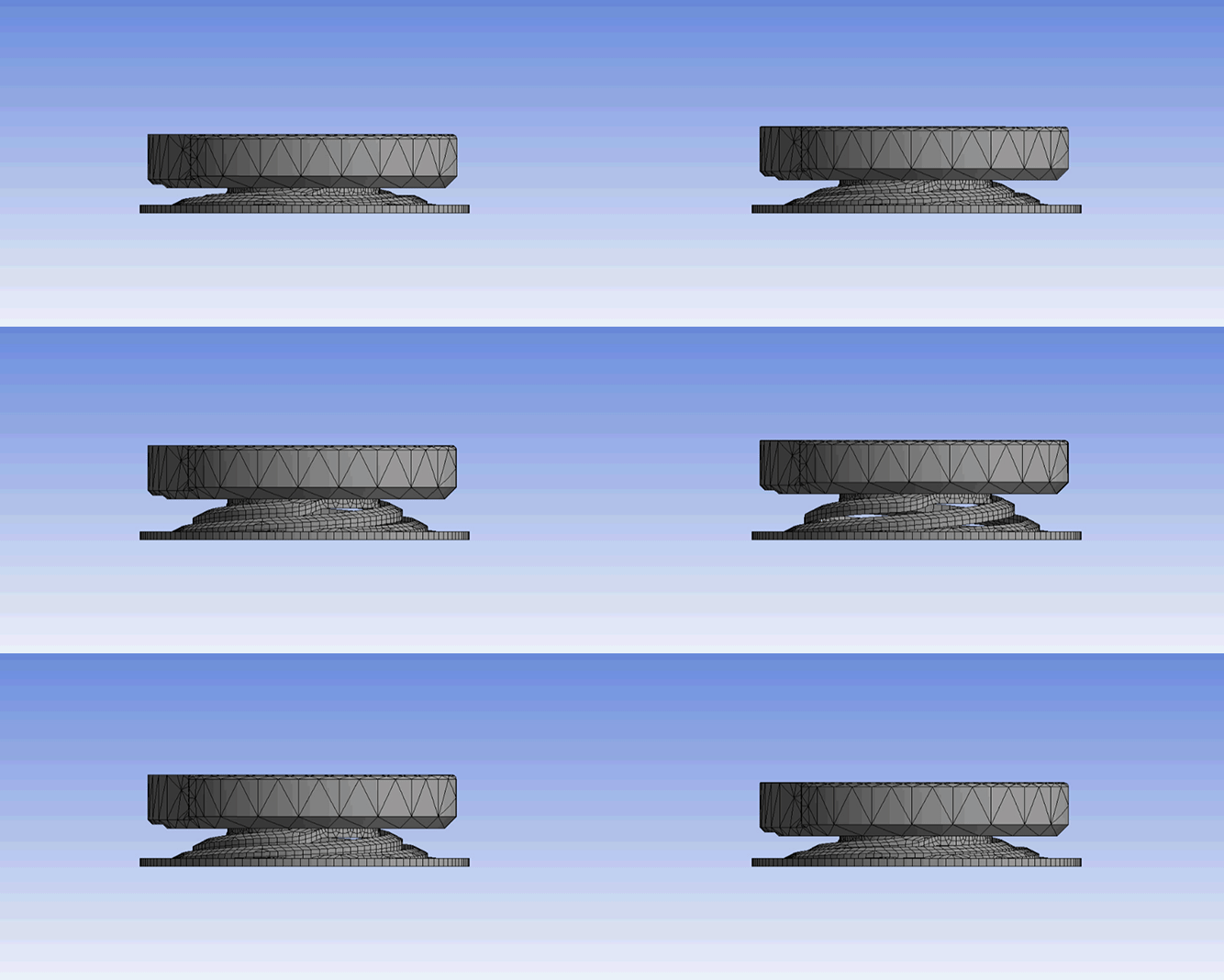
You need a steady g‑level and current. This helps every product in your lot work the same way. If vibration strength or current changes, your device may not feel right. It might also need more firmware changes. At INEED, you get advanced testing and strong process control. These keep g‑level and current steady in every lot. You can check the table below to see the results. The table shows how design, process, and inspection steps lower variation. These steps help you keep your product experience the same.
Key Practice | Impact on Stable G‑Level and Variation |
|---|---|
Robust design with real-world inputs | Reduces variation and keeps g‑level steady |
Advanced process control | Keeps g‑level and current steady in lots |
Thorough inspections | Finds variation early and keeps g‑level steady |
Predictive models and diagnostics | Stops variation before it affects lots |
Key Takeaways
Keep the g-level and current steady. This helps products work the same in every batch. Use strong design and good process control. Check products carefully to lower differences between them. Watch g-level and current all the time. Fix any changes fast to stop problems with quality. Make sure everyone follows the same steps in production. This helps every batch be high quality and means you do not need to change firmware often. Ask for feedback and use it to get better. This makes products more reliable and keeps customers happy.
Key Factors for Stable G‑Level in INEED Motors
Material Consistency
You need the same materials for each lot. This keeps g‑level and current steady. At INEED, you work with vendors to check every batch. Each batch must meet strict rules. This stops changes in vibration strength or current draw. You do not need to change your firmware for each lot. Small changes in materials can affect stability. The table below shows how this happens:
Material Property | Difference | Impact on Stability |
|---|---|---|
Elastic Modulus | 6.5% | Changes spring constant and vibrational behavior |
Spring Constant | 2.5% | Affects modal behavior by the square root of the difference |
You test each lot to make sure key parameters are right. These tests keep values within target limits. This protects your product’s user experience. It also lowers engineering work during ramp and sustaining phases. You check the quality of all catalytic steam reforming reagents. You also check calibrators and reagents. This makes sure every batch works well.
Process Control
You use strong process control steps at INEED. You do visual checks and tests to find problems early. You use predictive maintenance to stop issues before they start. You do regular maintenance to keep motors working well. These steps keep g‑level and current steady for Linear Vibration Motors and the LRA Electrical Motor LRA2024A-1088F.
Tip: Active vibration control lowers exported forces from about 4 N to less than 20 mN. This gives you more reliable and quiet motors.
You check the quality of all reforming steps. You use reagents and calibrators. You keep records for every lot. This helps you trace any changes back to their source. It makes it easy to keep your product quality high.
Equipment Calibration
You use accurate calibrators to check your equipment. You follow three main calibration steps:
Calibration Procedure | Description |
|---|---|
Sensor Frame Calibration | Fixes gain, offset, and alignment errors. Turns voltage into physical units. |
Mounting Frame Calibration | Sets the link between sensor and mounting frame. Needed for system accuracy. |
Anatomical Frame Calibration | Connects mounting frame to the object. Needed to know the object’s position and movement. |
You use calibrators and reagents to make tests correct. You repeat calibrations when needed to keep measurements right. This helps keep the reforming process quality high, especially for advanced motors like the LRA2024A-1088F.
Key Parameter | Target Tolerance | Recommended Acceptance Test |
|---|---|---|
G‑Level | ±0.1 Grms | In-line vibration test |
Current Draw | ±5% | Automated current measurement |
Frequency Response | ±2 Hz | Frequency sweep test |
These steps help keep your vibration motors stable and reliable, batch after batch.
Reducing Lot-to-Lot Variation in Production
Standardized Procedures at INEED
You want each production lot to have the same vibration strength and current draw. You do this by using the same steps every time. These steps help you make sure your results stay steady. When you use encapsulated vibration motors or maglev actuators, you must check that each unit meets high standards.
Here is how you can make your process the same:
Find the steps that need to be the same. Look for tasks that happen a lot or change often.
Write clear instructions. Make standard operating procedures, work instructions, checklists, and templates.
Teach your team. Make sure everyone follows the same steps and knows why each step matters.
Watch your process. Get feedback and look for ways to make it better.
You also work with your vendors. You check every batch of materials to make sure they meet your needs. This keeps vibration strength and current draw steady from lot to lot. You do not need to change your firmware for each batch. This way, your product works well and you do less engineering work during ramp and sustaining phases.
Note: Standardized steps help you stop variation before it gets to your production line. This keeps your quality high and your results steady.
Real-Time Monitoring and Data Analysis
You use real-time monitoring to spot changes in g-level or current right away. This lets you fix lot-to-lot variation before it affects your results. You set up sensors and data systems on your production line. These tools watch every step and tell you if something changes.
Here is how real-time monitoring helps you:
Evidence Type | Description |
|---|---|
Continuous Monitoring | You get real-time checks of equipment performance. You get alerts for defects or changes. |
Optimized Machinery Performance | You collect and study data right away. You can act fast if something is wrong and stop bigger problems. |
You use these systems for both encapsulated vibration motors and maglev actuators. You track key things like vibration strength, current draw, and frequency. If you see a change, you can stop the line and fix it. This keeps your lot-to-lot variation low and your quality high.
You can see the key parameters, target tolerances, and recommended tests in the table below:
Key Parameter | Target Tolerance | Recommended Acceptance Test |
|---|---|---|
G‑Level | ±0.1 Grms | In-line vibration test |
Current Draw | ±5% | Automated current measurement |
Frequency Response | ±2 Hz | Frequency sweep test |
You use these tests on every lot. This gives you steady results and helps you control variation.
Feedback Loops for Continuous Improvement
You do not just monitor your process. You use feedback loops to keep making your process better. You collect data from every lot. You compare your results and look for patterns. If you see lot-to-lot variation, you fix it right away.
You hold regular meetings with your engineers and quality managers. You look at your results and talk about any changes. You update your steps and controls based on what you learn. This keeps your process strong and your results steady.
You also share feedback with your vendors. You tell them if you see any variation in their materials. This helps them make their quality better and keeps your supply chain strong.
Tip: Continuous improvement means you always look for ways to lower variation and make your results better. This keeps your products reliable and your customers happy.
By following these steps, you control lot-to-lot variation and deliver high quality in every production run. You protect your user experience and do less extra engineering work. You build a strong base for long-term success.
Quality Control Protocols for Variation Management

In-Line Testing and Lot Comparison
Strong quality control helps you manage variation in each lot. At INEED, you test motors as they move down the line. This lets you find problems early. You compare each lot to a stable reference. This keeps your quality high, even at different sites.
You follow these steps for quality control:
Check tools and materials before making motors.
Test how long materials last to make sure parts are good.
Check the first motor from each lot.
Inspect every important step and test motor performance.
Do a final check before sending motors out.
You use ODS testing to find why vibration or performance changes. This helps you fix problems quickly. It keeps your results within target limits.
Key Parameter | Target Tolerance | Recommended Acceptance Test |
|---|---|---|
G‑Level | ±0.1 Grms | In-line vibration test |
Current Draw | ±5% | Automated current measurement |
Frequency Response | ±2 Hz | Frequency sweep test |
Statistical Process Control at INEED
You use statistical process control (SPC) to watch your process all the time. SPC helps you see variation before it gets big. You can spot trends and act fast. This keeps your quality high and motors reliable.
SPC gives you these benefits:
Models what affects product quality variation.
Shows ways to make your process better.
Helps you get good results every time.
You also use adaptive control algorithms. For example, the LRA2024A-1088F uses back-EMF monitoring to keep vibration frequency steady. This stops resonance drift and keeps your results consistent.
Troubleshooting and Corrective Actions
When you see variation, you act quickly. You use in-line testing data to find the cause. You use Motor Current Signature Analysis to spot problems like screw deformation or greasing issues. You also check for oil contamination in gear mesh cases. These steps help you fix problems before they change your results.
You work with vendors to keep vibration strength and current draw steady across lots. This means you do not need to change your firmware for each batch. Your product experience stays the same. You spend less time on engineering changes.
You hold regular training for your team. You teach them how to use quality control tools and improve your process. This focus on continuous improvement keeps your quality strong and your results reliable.
You can get steady results by using a strong evaluation process. Real-time monitoring helps you keep vibration strength and current draw steady. You work with your vendors to make sure these values do not change. This way, you do not need to change your firmware. Your product feels the same every time. You also spend less time fixing things during ramp and sustaining phases.
Use clear evaluation steps to lower variation.
Keep improving your process to get steady results.
Give feedback to vendors so they can do better.
Key Parameter | Target Tolerance | Recommended Acceptance Test |
|---|---|---|
G‑Level | ±0.1 Grms | In-line vibration test |
Current Draw | ±5% | Automated current measurement |
Frequency Response | ±2 Hz | Frequency sweep test |
You will see your products work better and have less variation. The evaluation process at INEED helps keep quality high for a long time. Studies show that good quality control and checking lead to better clinical performance. Continuous improvement makes variation go down and clinical results get better over time. When you use these steps, you get more good units, fewer defects, and a stronger brand. You also save money and make customers happier.
FAQ
How do you keep vibration strength and current draw stable across lots?
You work with vendors using strict steps. You check samples and lab results. You set rules for syngas production and hydrogen yield. You use studies and lab data. This keeps product UX safe and lowers engineering work.
Key Parameter | Target Tolerance | Recommended Acceptance Test |
|---|---|---|
G‑Level | ±0.1 Grms | In-line vibration test |
±5% | Automated current measurement | |
Frequency Response | ±2 Hz | Frequency sweep test |
What is the role of laboratory evaluation in quality control?
You use lab checks to test samples. You follow steps for each lab test. You compare lab results to rules. You collect data and use studies. This helps you get high hydrogen yield from biomass conversion and syngas.
Why do you need so many samples for evaluation?
You need samples to check lab results. You use steps for each sample. You compare sample data to rules. You use checks to find the best steps. You collect sample data to improve syngas production and hydrogen yield.
How do you use data to improve your protocol?
You collect data from lab samples. You use checks to compare lab results. You set rules for syngas and hydrogen yield. You use data to update your steps. You run studies to improve biomass conversion and syngas.
What criteria do you use for evaluation studies?
You set rules for lab checks. You use samples and lab results. You check data from syngas production and hydrogen yield. You follow steps for each lab test. You use studies to improve biomass conversion and get high hydrogen yield.
See Also
Precision Engineering in Vibration Systems for Enhanced User Experience
Effective Strategies for Enhancing LRA Motors in Designs
Understanding Frequency and Vibration Differences Affecting LRA Motors
Best Practices for Frequency Optimization in Compact Motor Uses
Seven Key Applications of Vibration Motors in Manufacturing Efficiency
Get Custom Micro DC Motors from
INEED Motors!
Leading Brand in Vibration Motor Manufacturing Industry