Specifying Frequency and Size for Coin vibration motors and LRA Vibration Motors

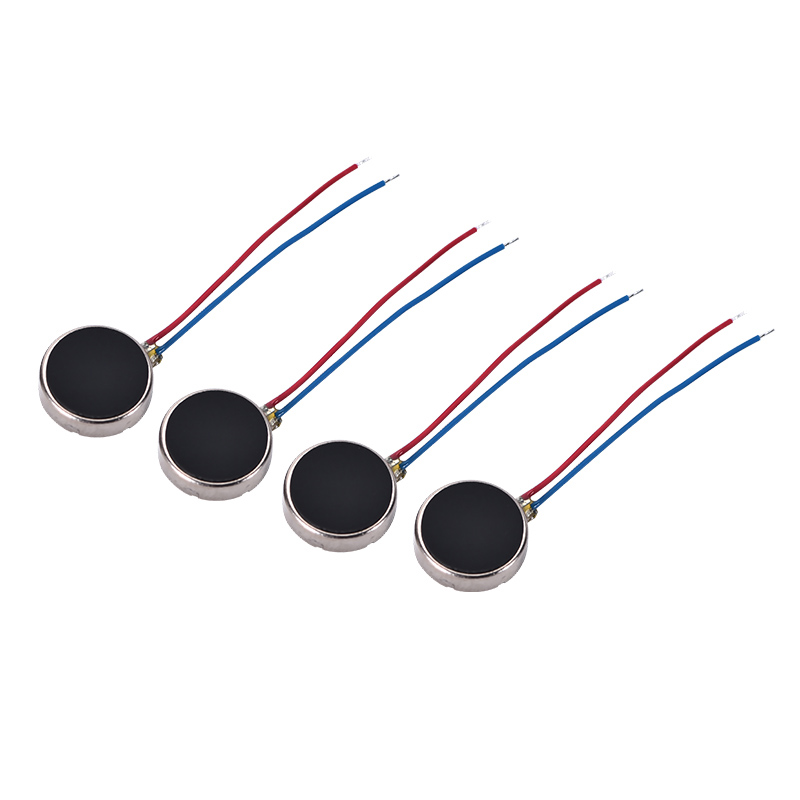
When you select coin vibration motors or LRA vibration motors, you must match the frequency and size to your device’s needs. This ensures your product operates efficiently and meets user expectations. Industry studies show that using the wrong motor can cause issues like reduced throughput, increased downtime, wasted energy, and shorter equipment life.
Underpowered motors may cause problems such as screen blinding in sensitive applications.
Oversized motors often waste energy and shorten device lifespan.
In regulated sectors, choosing the correct motor also helps meet safety and hygiene standards.
INEED offers a wide range of vibration motors for many industries. You can rely on their expertise to help you find a solution that fits your project needs.
Key Takeaways
Understand your application needs before selecting a vibration motor. Consider space limitations, mounting methods, and required feedback strength.
Choose the right frequency and amplitude for your device. Match these specifications to ensure effective haptic feedback that meets user expectations.
Consult INEED’s datasheets for detailed motor specifications. This helps you compare models and select the best fit for your project.
Always prototype and test the motor in your device. This step ensures the vibration feels right and meets quality standards before production.
Leverage INEED’s customization options to tailor motors to your specific needs. This can enhance performance and user experience in your devices.
Key Factors for Coin Vibration Motors
Application Needs and Constraints
When you choose coin vibration motors for your project, you must first understand the specific needs and limitations of your application. These motors work best in devices where space is limited and a flat profile is required. You often see them in wearables, smartphones, and compact medical devices. Their compact form factor makes them ideal for small devices, but it also means the vibration strength is lower than larger motors.
Common constraints you should consider include:
Limited internal space in the device
Need for easy and secure mounting, often using adhesive backing
Requirement for subtle or strong vibration feedback, depending on the application
Power supply limitations, especially in battery-powered devices
Tip: Always match the motor’s size and mounting method to your device’s available space and assembly process.
Frequency, Amplitude, and Size Selection
Selecting the right frequency, amplitude, and size for coin vibration motors ensures your device delivers the desired haptic feedback. Start by identifying the type of feedback your application needs. For example, consumer electronics like smartwatches require gentle vibrations for notifications, while gaming controllers need stronger, more immersive feedback.
You can follow these steps to specify the right motor:
Define the Application: Decide if your device needs subtle alerts or strong haptic feedback.
Choose the Size: Select a motor size that fits your device. Coin vibration motors typically range from 6 mm to 12 mm in diameter and 2.5 mm to 5 mm in thickness.
Set the Frequency: Match the motor’s frequency to your application. Most coin vibration motors operate between 50 Hz and 200 Hz. This range covers most notification and alert needs.
Determine the Amplitude: Pick an amplitude that matches the desired feedback strength. Amplitudes usually range from 0.4 G to 1.5 G. Higher amplitude means stronger vibration.
Check the Drive Conditions: Make sure the motor’s voltage and current requirements align with your device’s power supply. Typical operating voltages are 3.0V or 3.7V, with current draw between 30 mA and 100 mA.
Here is a table summarizing common sizes and performance:
Size (mm) | Frequency Range (Hz) | Vibration Force (g) | Operating Current (mA) |
|---|---|---|---|
6–12 x 2.5–5 | 50–200 | 0.4–2.5 | 30–80 @ 3V |
Amplitude affects how strong the vibration feels. In handheld devices, an amplitude between 0.5 mm and 1.5 mm influences how noticeable the feedback is to the user.
Note: Adjustable amplitude and frequency settings allow you to fine-tune the feedback for different applications.
INEED Coin Vibration Motor Features
INEED offers a wide selection of coin vibration motors designed for easy integration and reliable performance. You can choose from various diameters, thicknesses, and mounting options to fit your device. INEED motors come with adhesive backing for quick installation and offer multiple connection types, such as spring contacts, FPC, and bare pads.
INEED provides customization options to help you achieve the exact feedback you want. You can adjust vibration intensity, frequency, and duration to match your application. The table below highlights some of the customization aspects available:
Customization Aspect | Details |
|---|---|
Vibration Intensity | Adjustable |
Frequency | Customizable |
Duration | Adjustable |
You can also select the lead wire length and connector type to simplify assembly. INEED’s coin vibration motors operate at standard voltages like 3.0V and 3.7V, with typical no-load currents from 30 mA to 100 mA. This makes them suitable for battery-powered devices where energy efficiency matters.
Tip: Consult INEED’s datasheets and technical support to select the best motor for your device. Their team can help you with custom solutions if your project has unique requirements.
By understanding your application’s needs, selecting the right frequency and amplitude, and leveraging INEED’s customization options, you can ensure your device delivers effective and reliable haptic feedback.
LRA Vibration Motors: Technical Essentials
Resonant Frequency and Amplitude
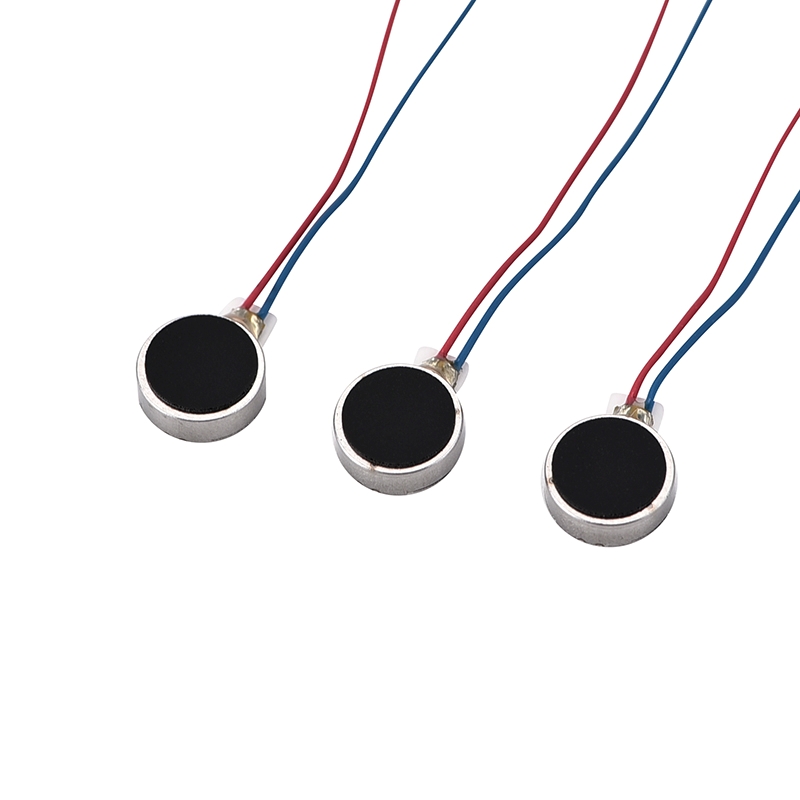
When you work with LRA (Linear Resonant Actuator) vibration motors, you need to understand two key concepts: resonant frequency and amplitude. These factors determine how the motor performs in your device.
The resonant frequency is the natural frequency at which the LRA motor vibrates most efficiently. At this frequency, the motor produces strong vibrations while using very little energy. This efficiency is important for portable devices, as it helps extend battery life.
When the LRA operates at its resonant frequency, it converts most of the electrical energy into mechanical vibration. This means you get larger amplitudes and higher efficiency.
The system minimizes impedance at resonance, so the motor vibrates with the least effort.
The amplitude is the strength of the vibration you feel. Amplitude affects how noticeable the feedback is to the user. If you increase the amplitude, the vibration feels stronger. However, too much amplitude can feel harsh or uncomfortable. LRA motors aim to balance strength and comfort, so users get clear feedback without discomfort.
Tip: Use the nominal voltage specified for your LRA motor to achieve the largest amplitude. If you need stronger feedback, you may need to adjust the drive signal or increase the contact surface area.
Here’s a simple step-by-step guide to help you specify the right LRA motor for your application:
Identify the Required Feedback: Decide if your device needs subtle or strong vibrations.
Determine the Resonant Frequency: Check the datasheet for the motor’s resonant frequency (usually between 60 Hz and 300 Hz).
Select the Size: Choose a motor size that fits your device. LRA motors come in diameters from 6 mm to 20 mm.
Set the Drive Conditions: Match the voltage and current to your device’s power supply. Most LRAs operate at 0.1–2.0 Vrms AC.
Test Amplitude: Adjust the drive signal to achieve the desired vibration strength.
Note: Always prototype and test the motor in your device to ensure the feedback feels right for your users.
INEED LRA Motor Solutions
INEED offers a range of LRA vibration motors designed for high efficiency, fast response, and low power consumption. These motors are ideal for applications where you need precise and reliable haptic feedback, such as smartwatches, fitness trackers, and gaming controllers.
Here’s how INEED LRA motors compare to traditional ERM motors:
Feature | INEED LRA Motors | Competitors (ERM Motors) |
|---|---|---|
Efficiency | Higher | Lower |
Response Time | 20–50 ms | 100–200 ms |
Power Consumption | Lower | Higher |
Application Suitability | High (wearables, smartphones) | Low (toys, basic devices) |
You get several advantages with INEED LRA motors:
Cost-effective and simple design
Suitable for advanced devices like gaming controllers and wearable technology
Fast and precise haptic feedback for a better user experience
INEED also helps you address integration challenges in consumer electronics. Their LRA motors come with dedicated driver chips, which give you precise control over voltage and frequency. You can customize the size, voltage, and vibration strength to fit your project. INEED supports prototyping and testing, so you can validate motor performance before final production.
Feature | Benefit |
|---|---|
Dedicated driver chips | Precise control over voltage and frequency, ensuring efficient vibrations |
Customization options | Adjust size, voltage, and vibration strength for your needs |
Prototyping and testing | Validate performance in real-world conditions, minimizing integration risks |
Tip: Reliable haptic feedback depends on proper component selection and resonance tuning. INEED’s technical team can help you optimize your design.
Application Examples in Wearables
You see LRA vibration motors in many wearable devices today. Their compact size and lightweight design make them perfect for smartwatches and health monitors. These motors provide accurate tactile feedback for user interactions.
Smartwatches use LRA motors to create precise, silent notifications. You feel every alert, even in noisy environments.
Health monitors rely on LRA motors for quick responses to alerts and notifications, helping users stay informed about their health.
Fitness trackers use LRA motors to deliver subtle, battery-efficient haptic alerts, so you never miss important reminders.
LRA motors improve the user experience in wearables compared to ERM motors. They offer:
Feature | LRA Motors | ERM Motors |
|---|---|---|
Haptic Feedback | Precise and reliable | Less efficient |
Energy Efficiency | More energy-efficient | Suitable for simpler applications |
Response Time | Faster response times | Slower response times |
Ideal Use Case | Wearable technology (smartwatches) | Toys or low-cost devices |
You benefit from tactile feedback for notifications, ensuring you feel alerts even when you cannot hear them. LRA motors make your device more responsive and personal, enhancing the overall interaction.
Note: INEED’s LRA vibration motors help you deliver a premium user experience in wearable technology, supporting both comfort and reliability.
Technical Specs & Datasheet Analysis
Voltage, Current, and Frequency Ranges
You need to check voltage, current, and frequency ranges before you select a vibration motor. These values help you match the motor to your device’s power supply and feedback requirements.
Voltage: Coin vibration motors usually operate at 3V DC. LRA motors often use 0.1–1.2 Vrms AC.
Current: Coin motors draw 30–100 mA. LRA motors require up to 80~200 mA.
Frequency: Coin motors run at 8,000–11,000 RPM, which converts to 130–180 Hz. LRA motors vibrate at their resonant frequency, often between 60–300 Hz.
Tip: Always check the datasheet for exact values. Matching these specs ensures your device works efficiently.
Interpreting INEED Datasheets
INEED datasheets give you detailed information about each motor. You can use these sheets to compare models and find the best fit.
Here is a step-by-step list to help you derive key specs:
Find RPM: Look for “Rated Speed” in the datasheet.
Convert RPM to Hz: Divide RPM by 60. Example: 10,000 RPM ÷ 60 = 167 Hz.
Check Size: Read “Diameter” and “Thickness” for coin motors or “Body Length” for LRA motors.
Identify Drive Conditions: Find “Rated Voltage” and “Rated Current.”
Locate Frequency: For LRA motors, check “Resonant Frequency.”
Review Mounting Options: Look for “Mounting Type” and “Connector Type.”
Parameter | Where to Find in Datasheet |
|---|---|
RPM | Rated Speed |
Hz | Convert RPM ÷ 60 |
Size | Diameter, Thickness, Body Length |
Voltage | Rated Voltage |
Current | Rated Current |
Frequency | Resonant Frequency |
Note: You can contact INEED’s technical support if you need help understanding datasheets.
Prototyping and Testing Tips
You should always test motors in your device before final production. Prototyping helps you check vibration strength, response time, and energy use.
Use free samples from INEED for your prototype.
Mount the motor as described in the datasheet.
Measure vibration force and frequency with a simple sensor.
Adjust drive voltage to see how feedback changes.
Record battery life and user experience.
Alert: Testing ensures your device delivers the right feedback and meets quality standards.
You can improve your design by following these steps and using INEED’s datasheets. This process helps you select the best motor for your application.
Practical Selection Guidance
Steps for Specifying Frequency and Size
You can follow these steps to specify the frequency and size for your vibration motor:
Identify Application Needs: Decide if you need subtle or strong feedback. Consider the device type and user expectations.
Measure Available Space: Use a caliper or ruler to measure the space for the motor. Check the datasheet for matching sizes.
Check Motor Size: For coin vibration motors, look for diameter and thickness. For LRA motors, check diameter and body length.
Find Rated Speed (RPM): Read the “Rated Speed” in the datasheet.
Convert RPM to Frequency (Hz): Divide the RPM by 60. For example, 10,000 RPM ÷ 60 = 167 Hz.
Review Resonant Frequency: For LRA motors, use the “Resonant Frequency” listed in the datasheet.
Determine Drive Conditions: Check the “Rated Voltage” and “Rated Current.” Make sure these match your device’s power supply.
Test and Adjust: Prototype with the motor. Adjust voltage or drive signal to fine-tune vibration strength.
Tip: Always test the motor in your device to confirm the feedback feels right.
Avoiding Common Mistakes
You can avoid many issues by following these guidelines:
Do not select a motor that is too large for your device.
Avoid mismatching voltage and current, which can cause poor performance.
Do not ignore mounting requirements. Secure installation prevents unwanted noise.
Always check the frequency and amplitude to match user comfort.
⚠️ Skipping datasheet review often leads to integration problems.
Consulting INEED for Custom Solutions
You can work with INEED to create a motor that fits your unique needs. INEED offers:
Customization Aspect | Details |
|---|---|
Vibration Intensity | |
Frequency | Customizable for different applications |
Duration | Tailored to project requirements |
Operating Voltage | Can be customized to match device power |
INEED supports you from prototype to mass production. You can collaborate with sales engineers to specify motor length, connection interfaces, and wiring options. Every motor goes through strict quality control and testing to ensure it meets your requirements.
SMD motors for premium wearables
Healthcare tools with strict quality standards
Custom solutions for alerts or notifications
Note: INEED’s flexible production lines handle both standard and custom orders, so you get the right motor for your project.
You can specify the right frequency and size for coin and LRA vibration motors by following a clear process. Always check datasheets and prototype to confirm the motor works well in your device. Testing helps you spot issues early and fine-tune vibration strength and response time.
INEED supports you with technical guidance and custom solutions for every project stage.
Specification | Importance in Application Needs |
|---|---|
Form Factor | Matches your device design |
Frequency | Shapes user feedback |
Amplitude | Sets vibration strength |
Power Consumption | Extends battery life |
Durability | Ensures long-term reliability |
Choosing the right specs ensures your device performs at its best.
FAQ
How do you convert RPM to Hz for a vibration motor?
You divide the motor’s RPM by 60. For example, if your motor runs at 10,000 RPM, you get 167 Hz.
Tip: Use this formula:
Frequency (Hz) = RPM ÷ 60
What steps help you find the right size and drive conditions?
Measure your device’s available space.
Check the datasheet for diameter and thickness.
Find the rated voltage and current.
Match these to your device’s power supply.
Can you customize vibration motors from INEED?
Yes, you can request custom sizes, frequencies, amplitudes, and connectors. INEED’s team helps you design a motor that fits your project’s needs.
What is the difference between coin and LRA vibration motors?
Coin motors use a spinning mass to create vibration. LRA motors use a moving mass and spring for precise feedback. LRA motors respond faster and use less power.
Why should you prototype before final production?
Prototyping lets you test vibration strength, response time, and energy use. You can adjust settings and ensure the motor works well in your device before mass production.
See Also
Enhancing LRA Motor Performance Through Frequency Optimization Techniques
Core Engineering Concepts for Designing Coin Vibration Motors
Strategies for Improving LRA Motors in Vibration Applications
Understanding Frequency and Vibration Effects on LRA Motor Efficiency
The Role of LRA Motors in Advancing Haptic Feedback Technology
Get Custom Micro DC Motors from
INEED Motors!
Leading Brand in Vibration Motor Manufacturing Industry