How to Master Drive Circuit Design for Linear Magnetic Rams

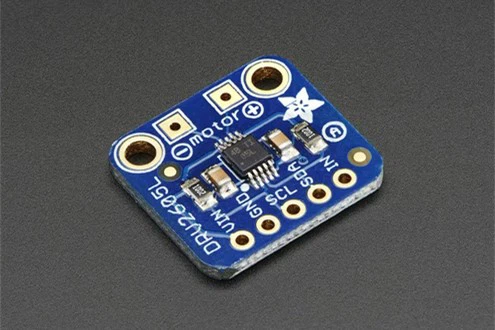
If you want to master drive circuit design for linear magnetic rams, you need to start with the right actuator. The MAG1020BEL40 from INEED stands out for its frictionless magnetic levitation, high vibration magnitude, and long lifespan. Compare its performance:
Metric | MAG1020BEL40 | Titanhaptics |
|---|---|---|
Vibration Magnitude | 2.0 Gp-p (15% higher) | N/A |
Lifespan | 1.2M cycles | 800K cycles |
Operational Efficiency | Frictionless maglev | N/A |
Lead Time | 3-4 weeks for 10K+ | N/A |
Use quality components and smart design choices to achieve reliable results.
Key Takeaways
Start with the right actuator, like the MAG1020BEL40, for optimal performance in linear magnetic rams.
Understand the basics of electricity and magnetism to design effective drive circuits.
Always match your circuit design to the actuator's specifications for reliable operation.
Test your circuits thoroughly to ensure they meet performance and efficiency goals.
Use high-quality components and simple layouts to minimize noise and enhance reliability.
Linear Magnetic Rams & INEED Solutions
What Are Linear Magnetic Rams?
You can find linear magnetic rams in many modern devices. These actuators use a magnetic field to create precise linear motion. You see them in game controllers, VR equipment, and medical devices. Linear magnetic rams deliver accurate and fast movement. They help you achieve high-quality tactile feedback. You need to understand how these actuators work before you design a circuit. The circuit controls the actuator and determines its performance. You must select the right circuit for your application. You can improve reliability and efficiency by using the best circuits.
Tip: Start by learning the basics of linear magnetic rams. This knowledge helps you build a strong foundation for circuit design.
INEED’s MAG1020BEL40 and Linear Vibration Motors
INEED offers advanced solutions for linear magnetic rams. The MAG1020BEL40 stands out with its magnetic levitation technology. You get frictionless operation and a long lifespan. This actuator covers a wide frequency range and responds quickly. You can use it in devices that need immersive haptic feedback. INEED also provides linear vibration motors. These motors use a voice coil to produce stable vibrations. You can customize the frequency and amplitude for your needs. Both products require a well-designed circuit. You must match the circuit to the actuator’s specifications. You can use standard driver ICs to control the circuits. You should test the circuits to ensure they meet your requirements. INEED’s products make circuit design easier and more reliable.
Choose the MAG1020BEL40 for high-end applications.
Use linear vibration motors for energy-efficient designs.
Always focus on circuit compatibility and performance.
You can visit INEED’s website for more details and technical support. You will find resources that help you optimize your circuits.
Core Principles of Drive Circuit Design
Electrical & Magnetic Basics
You need to understand the basics before you start designing any drive circuit. Every circuit for a linear magnetic ram relies on the relationship between electricity and magnetism. When you pass current through a coil, you create a magnetic field. This field moves the actuator inside the device. You must choose the right wire gauge and coil turns to match your voltage and current needs. Always check the resistance and inductance of your coil. These values affect how your circuit responds to signals. You should also consider the heat generated in your circuits. Too much heat can damage components and reduce reliability. Use a simple test setup to measure voltage, current, and vibration output. This helps you fine-tune your circuit for the best performance.
Magnetic Levitation Circuit Technology
You can boost performance by using magnetic levitation circuit technology. The MAG1020BEL40 from INEED uses this approach to achieve frictionless movement. The magnetic levitation circuit suspends the rotor with a stable magnetic field. This means the moving part does not touch other parts, so you get less wear and almost no noise. You gain precise control over the actuator’s motion. The magnetic levitation circuit also gives you a wider frequency response and faster reaction times. You will notice stronger vibration and more realistic tactile feedback. These features make the MAG1020BEL40 ideal for advanced devices that need high-fidelity haptics. When you design your circuit, focus on keeping the magnetic levitation circuit stable and efficient.
Single-Cell Power Considerations
Many compact devices use a single-cell power supply. You face unique challenges in these situations. A single-cell battery gives you limited voltage and current. You need your circuit to deliver high power density and efficiency. Managing electromagnetic interference is also important in small spaces. Too much interference can cause your circuits to malfunction. You can solve these problems by using integrated transformer technology. This helps you build low EMI isolated power supplies. It also reduces the number of extra parts you need. Always test your single-cell circuits for stability and efficiency. Make sure your magnetic levitation circuit works well with a single-cell setup. This ensures your device runs smoothly and reliably.
Tip: Always match your circuit design to the power source and actuator type for the best results.
Drive Circuit Design Steps
Requirements & Component Selection
Start your drive circuit design by listing the requirements for your application. Think about the type of actuator you need, the available power supply, and the expected performance. For example, if you want fast and strong haptic feedback in a gaming controller, you should consider the INEED MAG1020BEL40. This actuator uses magnetic levitation, which reduces friction and noise. It also works well with standard LRA drivers and provides immersive sensations for gaming or touchscreens.
Here is a quick comparison of key features for the MAG1020BEL40:
Feature | MAG1020BEL40 |
|---|---|
Rise Time | 35 milliseconds |
Fall Time | 50 milliseconds |
Vibration Strength | Excellent response |
Application Suitability | High-speed gaming |
Lifespan | Up to 1.2 million cycles |
When you select components, focus on these steps:
Choose the actuator that matches your performance needs.
Pick a driver IC that supports your actuator. The MAG1020BEL40 works with popular haptic driver ICs.
Make sure your power supply fits your single-cell requirements.
Select passive components, such as resistors and capacitors, that match your voltage and current needs.
Check the coil specifications for your actuator to ensure proper operation.
Tip: Always match your actuator and driver IC to your power source for the best circuit performance.
Circuit Schematic & Simulation
After you select your components, you need to create a circuit schematic. Use a schematic design tool to draw the connections between your actuator, driver IC, power supply, and passive parts. Keep your layout simple and clear. This helps you avoid mistakes and makes troubleshooting easier.
Once you finish your schematic, run a simulation. Simulation software lets you test your circuit before you build it. You can check if your design meets your requirements. Look for issues such as voltage drops, current spikes, or unwanted noise. Adjust your design as needed to fix these problems.
Draw the schematic with clear labels for each part.
Simulate the circuit to test for stability and efficiency.
Focus on single-cell power scenarios if your device uses a small battery.
Make changes to your design based on simulation results.
Note: Simulation helps you catch errors early and saves time during prototyping.
Prototyping & Testing
Build a prototype of your drive circuit after you finish your schematic and simulation. Use a breadboard or a custom PCB for assembly. Place your actuator, driver IC, and other components as shown in your schematic. Connect your single-cell power supply and test the circuit.
Test your prototype in real-world conditions. Measure the vibration strength, response time, and power consumption. Check if the actuator delivers the expected performance. If you use the MAG1020BEL40, you should notice fast rise and fall times, strong vibration, and quiet operation. Test the circuit for reliability by running it through many cycles.
Assemble the circuit on a breadboard or PCB.
Connect the single-cell battery and power up the circuit.
Measure key parameters such as vibration, current, and voltage.
Run repeated tests to check for durability and stability.
Make improvements to your design if you find any issues.
Tip: Testing helps you confirm that your drive circuit design meets your goals for efficiency and reliability.
By following these steps, you can master drive circuit design for linear magnetic rams. Careful requirements analysis, smart component selection, clear schematics, thorough simulation, and hands-on testing will help you achieve the best results for your application.
Circuit Challenges & Solutions
Common Pitfalls in Circuit Design
When you design a drive circuit for a linear magnetic ram, you may face several challenges. Many users overlook the importance of matching the circuit to the actuator’s specifications. If you use the wrong driver IC or power supply, your circuit may not deliver enough current or voltage. This can cause weak vibration or even damage the actuator. You should also watch for overheating. Running the actuator outside its rated duty cycle can lead to excess heat and early wear. In single-cell applications, low voltage can limit performance if you do not optimize the circuit for efficiency.
Another common issue is electromagnetic interference. If your layout does not minimize noise, your circuits may pick up unwanted signals. This can cause erratic behavior or reduce the lifespan of your actuator. You should always check the environmental protection rating for your application. For indoor use, an IP54 rating is usually enough. For outdoor or harsh environments, you need a higher rating like IP66.
Note: Regular maintenance helps your circuits last longer. Operate within the rated duty cycle, ensure proper environmental protection, and lubricate moving parts if needed.
Troubleshooting Techniques
If your circuit does not work as expected, you can follow a step-by-step troubleshooting process. Start by checking all connections. Loose wires or poor solder joints can cause intermittent problems. Next, measure the voltage and current at key points in your circuit. Compare these values to the actuator’s requirements. If you see low voltage in a single-cell setup, check your power supply and driver IC.
You should also look for signs of overheating. Touch the components after running the circuit for a few minutes. If any part feels too hot, reduce the duty cycle or improve cooling. Use an oscilloscope to check for noise or spikes in your circuits. If you find interference, adjust your layout or add filtering components.
INEED offers technical support for their actuators and circuits. You can contact their team for help with troubleshooting or optimizing your design. Their reliable products and support make it easier to solve circuit challenges and keep your devices running smoothly.
Operate within the rated duty cycle.
Ensure the correct environmental protection rating.
Lubricate moving parts for high-cycle circuits.
By following these steps, you can avoid common pitfalls and keep your drive circuits efficient and reliable.
Circuit Optimization & Example
Efficiency & Reliability Tips
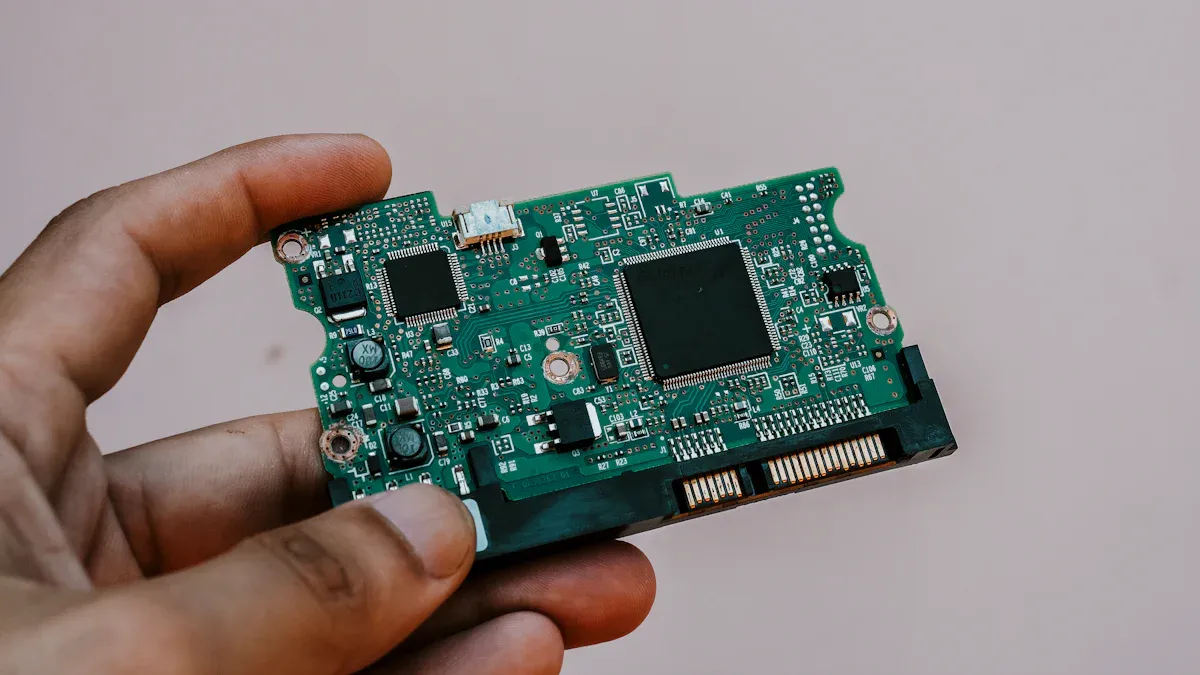
You can optimize your drive circuit for efficiency and reliability by following a few key steps. First, always match your circuit design to the actuator’s specifications. This ensures you get the best performance from your magnetic actuator. Use high-quality components to reduce the risk of failure. Keep your layout simple to minimize noise in your circuits.
You should test your circuit under different conditions. Try running it at various voltages and loads. This helps you find weak points before you build your final device. Add protection features, such as current limiting and thermal cutoffs, to prevent damage. Use a stable power supply to keep your circuits running smoothly.
Scalability also matters when you design circuits for advanced applications. A data-driven self-terminating write circuit can boost reliability and efficiency, especially in memory systems. This type of circuit saves power and keeps performance consistent as you scale up your design. You can achieve up to 85% power savings compared to older methods. Symmetry and minimal edge variations in your circuits help you build larger, more reliable systems.
Tip: Regular testing and smart protection features keep your circuit efficient and extend its lifespan.
Example: INEED MAG1020BEL40 Circuit Walkthrough
Let’s walk through a sample circuit using the INEED MAG1020BEL40. Start by connecting the actuator to a compatible haptic driver IC, such as the TI DRV2605. Use a single-cell power supply if your device is compact. Place passive components, like resistors and capacitors, as shown in your schematic.
After assembly, measure the key performance metrics. The table below shows what you can expect from a well-designed circuit with the MAG1020BEL40:
Metric | Value |
|---|---|
Rise Time | 35 ms |
Fall Time | 50 ms |
Vibration Magnitude | 2.0±0.5 Gp-p |
Lifespan | 1,200,000 cycles |
Test your circuit by sending different vibration patterns. Check the response time and vibration strength. If you see fast rise and fall times, your circuit is working well. Monitor the actuator’s temperature during long tests. If it stays cool, your circuit is efficient.
You can repeat these steps for other circuits or when you scale up your design. This approach helps you build reliable and high-performance magnetic actuator systems.
You can master drive circuit design for linear magnetic rams by following each step in this guide. Start with clear requirements, select quality components, and test your circuits. Using high-quality actuators from INEED improves your results in many applications, including those that involve coil-based manipulation or separation of particles. Apply these strategies, use INEED’s technical support, and keep refining your designs for the best performance.
FAQ
How do you connect a linear magnetic ram to a drive circuit?
You connect the actuator’s coil to a compatible driver IC. Make sure the power supply matches your application. Test the circuit for stable vibration. This setup works well for magnetophoretic circuits and microfluidic devices.
Can you use these actuators for single-cell manipulation?
Yes, you can use linear magnetic rams for single-cell manipulation. They help move cells or bioparticles in microfluidic channels. You get precise control for applications in single-cell biology and separation.
What is the role of magnetophoretic devices in microfluidic applications?
Magnetophoretic devices move particles or cells using magnetic fields. You can use them in microfluidic applications for manipulation and separation. These devices work well in magnetophoretic integrated circuits and magnetophoretic random access memory.
Which driver ICs work best for INEED’s MAG1020BEL40?
You can use standard haptic driver ICs like the TI DRV2605. These ICs support simple magnetic levitation and magnetophoretic transport. Always check compatibility with your actuator and application.
How do you improve reliability in magnetophoretic transistors and capacitors?
You improve reliability by using high-quality components and a stable power supply. Test your circuit under different loads. This approach works for mosfet-based magnetophoretic transistors and magnetophoretic capacitors in advanced applications.
See Also
Enhancing LRA Motors for Effective Vibrating Object Applications
Exploring Motor Diagrams: Types and Uses of ERM Vibration Motors
Maximizing Efficiency by Tuning Resonance Frequency in LRA Motors
Mastering Arduino Vibration Motors in Just Five Simple Steps
Choosing the Perfect ERM Vibrator Motor in Eight Simple Steps
Get Custom Micro DC Motors from
INEED Motors!
Leading Brand in Vibration Motor Manufacturing Industry