Documenting MTTF and Reliability for Medical Wearable Motors


Reliable Medical Wearable Motors protect users and help you meet strict regulatory standards. You must document reliability and MTTF to avoid safety risks and support compliance. Many devices face battery and recording errors, with upload failures happening in about 20% of cases. You need to consider electromagnetic compatibility, thermal management, electrical safety, and biocompatibility. INEED’s vibration motor solutions help you achieve consistent performance and support proper documentation using industry standards and best practices.
69% of users agree to wear devices
21% of devices show battery or recording errors
Regulatory approval requires EMC, biocompatibility, and electrical safety
Key Takeaways
Documenting reliability and Mean Time To Failure (MTTF) is crucial for ensuring safety and compliance in medical wearable motors.
Aim for MTTF values above 10,000 hours to guarantee the longevity and reliability of non-repairable motors in connected healthcare.
Conduct thorough testing under real-world conditions to accurately assess failure rates and improve the design of wearable devices.
Use structured templates for documentation to meet regulatory standards and enhance clarity in reporting test results.
Implement best practices, such as waterproofing and secure mounting, to boost the performance and durability of wearable motors.
MTTF and Reliability Basics
What is MTTF?
Mean Time To Failure (MTTF) measures how long a device operates before it stops working. You use MTTF to estimate the average operational time for non-repairable parts in medical wearable motors. In connected healthcare, you rely on MTTF to predict when a vibration motor might need replacement. For coin mini vibrating capsule motors, MTTF is crucial because you cannot repair them once they fail. You should look for motors with documented MTTF values exceeding 10,000 hours, especially in critical-care wearable electronics. This helps you ensure the desired lifetime of your connected medical devices.
MTTF predicts average operational time.
Non-repairable motors depend on high MTTF.
Values above 10,000 hours support reliability in medical wearables.
Reliability in Medical Wearable Motors
Reliability means your wearable electronics perform as expected throughout their lifetime. You want motors that deliver consistent vibration feedback in internet of medical things devices. Several factors affect reliability in medical wearable motors. You must consider motor design, voltage, load, and environmental conditions. The table below shows key factors that impact reliability in wearable applications:
Factor | Importance |
|---|---|
Motor Design | Affects performance and durability in medical applications. |
Voltage and Power | Higher voltage increases RPM and vibration strength; excessive voltage can cause overheating. |
Load and Resistance | More load requires more power, which can reduce efficiency and increase heat. |
Environmental Conditions | Must match device conditions for optimal motor performance. |
You also need to check the eccentric mass, motor shaft, bearings, housing, and power connections. These parts help maintain reliability in connected healthcare and internet of medical things devices.
Why Documentation Matters
You must document reliability and MTTF for medical wearable motors. Setting reliability goals at the product design kickoff helps you succeed. You need to record the desired lifetime and performance metrics, which regulatory bodies or your company may define. Your reliability test plans must match real use environments and include rigorous testing. This ensures your wearable electronics meet regulatory standards for connected healthcare.
Comprehensive documentation of reliability metrics, such as Mean Time To Failure (MTTF), is essential for ensuring device safety and optimal performance, which are critical factors in regulatory submissions.
When you document reliability, you support regulatory approval and protect users. You also improve the performance of internet of medical things devices and wearable electronics.
Key Data for Medical Wearable Motors
Failure Rates and Test Results
You need to collect accurate failure rates and test results when you document medical wearable motors. Failure rates show how often a motor stops working during its expected lifetime. You can use this data to predict how long your wearable electronics will last in real-world use. Testing helps you find weak points in your design before you release your product. You should run tests that match the actual conditions your device will face. These tests include vibration, temperature, humidity, and electrical cycling.
You can use a table to organize your failure data:
Test Type | Number of Units | Failures Observed | Failure Rate (%) |
|---|---|---|---|
Vibration | 1000 | 2 | 0.2 |
Temperature Cycle | 1000 | 1 | 0.1 |
Humidity | 1000 | 3 | 0.3 |
Electrical Cycle | 1000 | 2 | 0.2 |
You should record every failure and the conditions that caused it. This helps you improve the reliability of your wearable devices. You also need to keep detailed records for regulatory approval. When you use INEED vibration motors, you benefit from strict quality control and lifetime testing. These steps help you meet the high standards for connected healthcare and internet of medical things applications.
Tip: Always test your motors under the same conditions your users will experience. This gives you the most accurate failure rates and helps you build trust in your wearable products.
Operating Conditions and Usage
You must understand the operating conditions and usage patterns for your wearable electronics. These factors affect the reliability and lifetime of your medical wearable motors. You should consider temperature, humidity, vibration frequency, and duty cycle. The duty cycle shows how often the motor runs during normal use. For example, a fitness tracker may use its vibration motor for short alerts many times each day.
You can use a checklist to track key operating conditions:
Temperature range (°C)
Humidity levels (%)
Vibration frequency (Hz)
Duty cycle (on/off time)
Power supply voltage (V)
Mechanical load
You should match your test conditions to real-world use. This helps you predict how your wearable electronics will perform over time. You also need to consider the environment for connected healthcare and internet of medical things devices. Some devices may face sweat, dust, or water. You must test for these factors to ensure reliability.
Note: Accurate usage data helps you set the desired lifetime for your connected medical devices. This supports better design and longer product life.
INEED Vibration Motor Data Points
INEED provides detailed data points for vibration motors used in wearable applications. You can use these data points to document reliability and support regulatory submissions. INEED tests every motor for performance, durability, and safety. The company uses a multi-step quality control process that includes:
Tool inspection
Material inspection
Material lifetime test
First article inspection
100% inspection of key processes and motor performance
Final inspection and shipment inspection
Motor lifetime test
You should collect the following data points for each INEED vibration motor:
Data Point | Description |
|---|---|
Rated voltage | The standard operating voltage |
Rated current | The typical current during operation |
Starting voltage/current | The minimum voltage/current to start the motor |
Vibration force | The strength of the vibration |
Speed (RPM) | The rotation speed of the motor |
Lifetime test results | Hours or cycles before failure |
Environmental test results | Results from temperature, humidity, and drop tests |
Failure analysis | Details on any failures and root causes |
You can use these data points to compare different motors and choose the best one for your wearable electronics. INEED’s strict testing ensures you get motors that meet the needs of internet of medical things and connected healthcare devices. You can trust these motors to deliver reliable performance throughout the desired lifetime of your product.
Remember: Good documentation of these data points helps you prove the reliability of your medical electronics. This is important for both product success and regulatory approval.
Calculating MTTF and Reliability
Calculation Methods for Wearable Motors
You need to use clear methods to calculate Mean Time To Failure (MTTF) and reliability for wearable electronics. Start by collecting data from real-world tests or accelerated life testing. For medical wearable motors, you often use the following formula to calculate MTTF:
MTTF = Total Operating Time of All Units / Number of Failures
Suppose you test 1000 motors for 1000 hours each and record 2 failures. The total operating time is 1,000,000 hours. Divide this by the number of failures (2), and you get an MTTF of 500,000 hours.
You should also consider the reliability function, which predicts the probability that a motor will operate without failure for a specific period. The basic reliability formula is:
R(t) = e^(-λt)
Here, R(t) is the reliability at time t, and λ (lambda) is the failure rate. You calculate λ by dividing the number of failures by the total operating time. For example, if you observe 2 failures over 1,000,000 hours, λ = 2 / 1,000,000 = 0.000002 failures per hour.
Different calculation methods can give you different results. Studies show that accuracy varies between devices and methods. For example, some wearable devices may overestimate or underestimate certain measurements compared to video analysis. This means you must choose the right method for your specific application in connected healthcare. Always match your calculation method to your device and testing setup to get the most reliable results.
Tip: Use the same calculation method throughout your project to keep your data consistent and easy to compare.
Data Analysis Techniques
After you collect your test data, you need to analyze it to understand the reliability of your wearable electronics. Several techniques help you interpret your results and make decisions about your product’s performance and lifetime.
Technique | Description |
|---|---|
Intraclass Correlation Coefficient (ICC) | Measures how closely repeated tests agree, showing relative reliability. |
Standard Error of Measurement (SEM) | Shows how precise your measurements are, helping you judge absolute reliability. |
Smallest Detectable Difference (SDD) | Tells you the smallest change you can trust as real, not just random error. |
You can also use test-retest reliability to check if your results stay the same over time. If your ICC values are above 0.50, you have acceptable reliability for most wearable applications in the internet of medical things.
Technique | Description |
|---|---|
Test-Retest Reliability | Compares results from repeated tests to see if they are consistent. |
Moderate to Excellent ICC Values | ICC values above 0.50 mean your tests are reliable. |
You should use these techniques to check your data before making decisions about your connected healthcare devices. This helps you spot any problems early and improve your product before it reaches users.
Note: Good data analysis helps you find hidden issues and improve the reliability of your medical electronics.
INEED Coin Vibration Motor Example
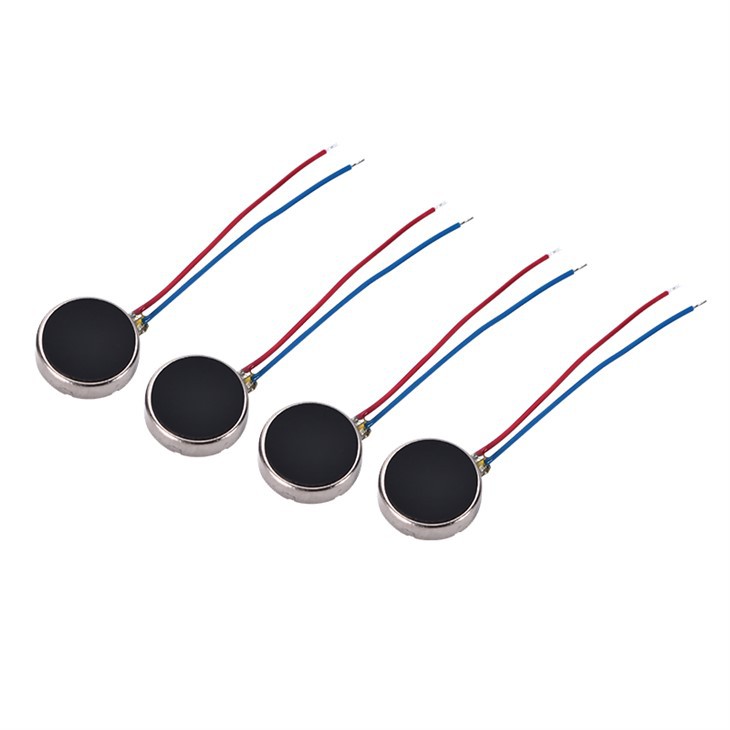
Let’s walk through a practical example using the INEED Coin Vibration Motor, which is popular in wearable electronics and connected medical devices. Suppose you want to document the MTTF and reliability for a batch of these motors used in a new fitness tracker.
Step 1: Set Up the Test
Test 500 motors under real-world conditions that match your wearable application.
Run each motor for 1,000 hours, cycling on for 1 second and off for 2 seconds, as typical in internet of medical things devices.
Step 2: Record Failures
After testing, you find 1 failure in the group.
Total operating time = 500 motors × 1,000 hours = 500,000 hours.
Step 3: Calculate MTTF
MTTF = 500,000 hours / 1 failure = 500,000 hours.
Step 4: Calculate Failure Rate (λ)
Failure rate λ = 1 failure / 500,000 hours = 0.000002 failures per hour.
Step 5: Calculate Reliability Over Desired Lifetime
Suppose you want to know the reliability over 10,000 hours (the desired lifetime for your wearable).
R(10,000) = e^(-0.000002 × 10,000) = e^(-0.02) ≈ 0.9802, or 98.02%.
This means that after 10,000 hours, about 98% of your motors will still work without failure. You can use this data to show regulators and customers that your product meets high standards for connected healthcare and the internet of medical things.
Step 6: Analyze the Data
Use ICC to check if repeated tests give similar results.
Calculate SEM and SDD to understand the precision and smallest detectable changes in your measurements.
By following these steps, you can confidently document the reliability and performance of your INEED Coin Vibration Motor in wearable electronics. This process helps you meet regulatory requirements and build trust in your connected healthcare solutions.
Remember: Careful calculation and analysis protect users and support the success of your medical wearable motors.
Standards and Compliance for Wearable Devices
ISO and FDA Requirements
You must follow strict standards when you design wearable electronics for connected healthcare. ISO 13485 sets the quality management system for medical devices. ISO 14971 covers risk management, which helps you control hazards and reduce failure in your products. The FDA also requires proof of clinical safety and effectiveness. You need to show that your wearable meets these standards before you can sell it. Continuous monitoring and documentation are necessary throughout the product’s lifetime. This helps you keep up with changes in regulations and technology.
Compliance Challenge | Description |
|---|---|
Maintaining Up-to-Date Documentation | You must keep your reliability documentation current to stay compliant. |
Issues with Manual Documentation | Manual records take time and can lead to errors. |
Complex Regulatory Compliance | Navigating rules can delay your product and increase costs. |
Best Practices for INEED Motors
You can improve the reliability of INEED vibration motors in wearable electronics by following best practices. Waterproofing protects the motor from moisture. Use a high-viscosity potting compound to seal gaps. Mount the motor in recessed pockets to improve vibration and reduce noise. Secure mounting prevents mechanical chatter. Use flexible wires and cover bare wires to prevent short circuits. Check vibration patterns often to catch problems early. Damping materials absorb extra vibrations and protect sensitive parts. These steps help your wearable last longer and perform better in connected healthcare and the internet of medical things.
Waterproof the motor with potting compound.
Use recessed pockets for mounting.
Secure all wiring and cover bare wires.
Monitor vibration patterns regularly.
Add damping materials for stability.
Regulatory Documentation Tips
You can avoid regulatory delays by using smart strategies for documentation. Automated submission timelines and reminders help you stay on track. Smart dashboards and predictive analytics let you spot risks before they become problems. Use built-in global compliance templates to save time. API-based integrations with your quality management systems keep your data current. Classify and tag documents to match regulatory needs. Sync product changes with your submissions. Real-time access to product data and automatic audit trails make your process smoother. Avoid common errors like missing records, outdated templates, or poor audit trails.
Error Type | Description |
|---|---|
Incorrectly Established Development Procedures | Lack of clear processes can cause inconsistent results. |
Missing documents can block compliance during audits. | |
Non-Verifiable Compliance | You must document and audit compliance to prove safety and conformity. |
Tip: Keep your documentation organized and up to date. This helps you prove reliability and meet the demands of connected healthcare and the internet of medical things.
Structuring Reliability Documentation
Recommended Format and Templates
You need a clear structure for documenting reliability in wearable electronics. Start with a summary of your test objectives and methods. Include sections for test results, analysis, and conclusions. Use standardized templates to organize your data. Many manufacturers follow regulations such as CFR 820.72 and ISO 13485:2016. These templates help you meet compliance requirements and make your reports easy to review.
A typical reliability documentation template includes:
Test objectives and scope
Description of the wearable device and motor
Testing methods and conditions
Data tables for failure rates and environmental tests
Analysis of connected healthcare performance
Conclusions and recommendations
You should validate your test methods early. Robust Test Method Validation (TMV) saves time and money. It also increases measurement confidence and reduces compliance risks.
Presenting Data Clearly
You must present your data in a way that regulators and engineers can understand. Use tables and charts to show failure rates and test results. Keep your explanations simple and direct. Avoid technical jargon unless necessary. Make sure your data matches the requirements for connected healthcare and wearable electronics.
Test Type | Units Tested | Failures | Failure Rate (%) |
|---|---|---|---|
Vibration | 500 | 1 | 0.2 |
Humidity | 500 | 2 | 0.4 |
Tip: Use visual aids like graphs or tables to highlight key points. Clear presentation helps you communicate reliability and supports regulatory approval.
Common Pitfalls to Avoid
You can avoid many problems by following best practices. Some common pitfalls include:
Using inadequate measuring equipment
Allowing operator-dependent variability
Writing unclear testing instructions
Applying improper measurement methods
Failing to align tests with product requirements
You should check your documentation for these issues. Make sure your reliability reports for wearable devices are complete and accurate. Keep your records up to date for connected healthcare applications. Address every failure and document the root cause. This helps you improve your wearable electronics and meet regulatory standards.
You can document MTTF and reliability for medical wearable motors by following clear steps. Collect accurate test data, analyze results, and use structured templates. INEED’s vibration motor solutions help you meet compliance and improve device performance. Adopt best practices, update your records, and review your process often. Continuous improvement protects users and supports product success.
Reliable documentation builds trust and ensures safety in wearable technology.
FAQ
What does MTTF mean for medical wearable motors?
MTTF stands for Mean Time To Failure. You use it to estimate how long a motor will work before it stops. This helps you plan maintenance and predict device lifetime.
How do you test reliability in vibration motors?
You run motors through cycles of vibration, temperature, and humidity tests. You record failures and analyze the data. This process helps you understand how motors perform in real-world conditions.
Why should you document operating conditions?
You document operating conditions to show how motors behave in different environments. This information helps you meet regulatory standards and improve device safety.
What makes INEED vibration motors suitable for medical wearables?
INEED vibration motors offer strict quality control, customizable features, and proven durability. You can rely on their performance for medical devices that require consistent and safe operation.
See Also
Top 5 Compact Vibration Motors for Wearable Devices
Ultimate Guide to SMD Vibration Motors for Engineers
Guide to 3V Motors: Uses and Specs for ERM Systems
Get Custom Micro DC Motors from
INEED Motors!
Leading Brand in Vibration Motor Manufacturing Industry