ERM vs LRA vs Brushless Coin Motors: 5‑Year TCO Explained

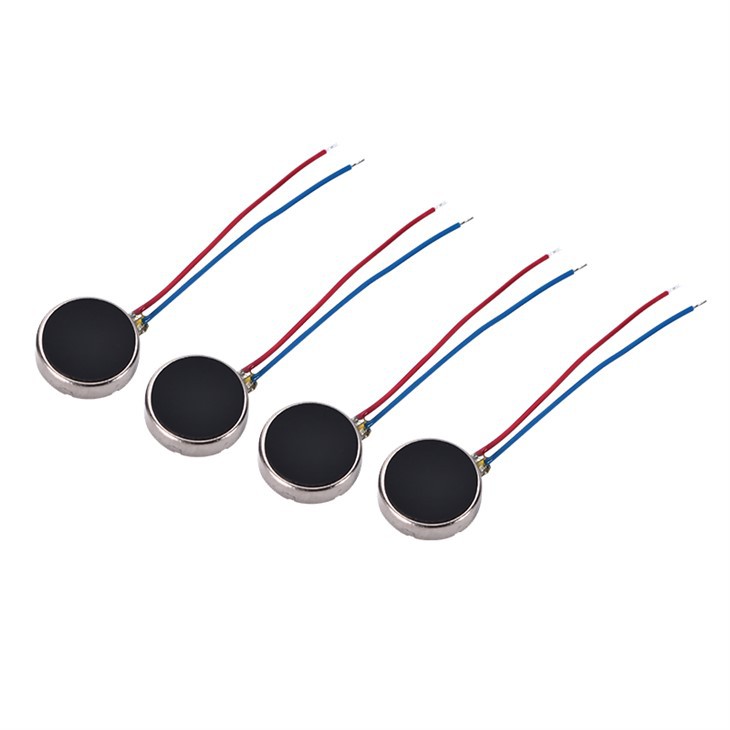
You want the lowest total cost of ownership for your devices. Over five years, Brushless Coin Motors usually give you the best value in most B2B settings. These motors last longer, use less energy, and need less maintenance than ERM or LRA models. Driver IC costs and field failures stay low as well. INEED Motors delivers high-quality, customizable vibration motors to help you meet your project goals with confidence.
Key Takeaways
Brushless Coin Motors offer the lowest total cost of ownership over five years due to their long lifespan and low maintenance needs.
Understanding total cost of ownership (TCO) helps you make informed decisions by considering all costs, not just the initial price.
Choose motors based on your application needs, such as duty cycle and environment, to maximize performance and minimize costs.
Energy efficiency in motors leads to lower operating costs and extended device life, making it a crucial factor in your selection.
INEED Motors provides customizable solutions and expert guidance to help you select the right motor for your specific project requirements.
Understanding 5-Year TCO
What Is Total Cost of Ownership
When you choose a vibration motor for your product, you want to know more than just the price tag. You want to understand the total cost of ownership (TCO). TCO means the full amount you will spend on a motor over its entire life in your device. This includes not only the purchase price but also what you pay for installation, energy use, maintenance, and replacements.
TCO helps you see the real value of your investment. If you focus only on the upfront cost, you might miss hidden expenses that add up over time. By looking at TCO, you can pick a motor that saves you money and trouble in the long run.
You should always evaluate vibration motors based on their ability to reduce your total cost of ownership. This approach helps you make smarter decisions and avoid surprises later.
Main TCO Factors for Vibration Motors
Several key factors shape the TCO for vibration motors. Each one can impact your long-term costs in different ways:
Component | Impact on Long-term Costs |
|---|---|
Power output and size | Larger, high-power motors cost more to make and buy, raising your overall TCO. |
Material quality and construction | Better materials last longer and need less maintenance, lowering your costs over time. |
Brand reputation and manufacturer | Trusted brands often give better support and warranties, adding value for you. |
Technological features and controls | Advanced features boost efficiency and cut down on wear, reducing maintenance needs. |
Application-specific design | Custom designs may cost more at first but can improve performance and lifespan. |
Market demand and supply dynamics | Changes in the market can affect prices and availability, which can change your TCO. |
You also need to consider installation and replacement costs. For example, ERM motors usually cost between $0.50 and $4.00 to install or replace. LRA motors range from $0.80 to $8.00. Coin vibration motors can be as low as $0.30 to $1.20. These numbers show why it is important to look at all costs, not just the initial price.
By understanding these factors, you can choose the right vibration motor for your application and keep your total costs under control.
ERM Motors TCO Analysis
Cost Structure and Lifetime
When you consider ERM (Eccentric Rotating Mass) motors for your application, you often look at their upfront price. ERM motors usually have a lower initial cost compared to other vibration motor types. This makes them attractive for projects with tight budgets or high production volumes. However, you should also think about how long these motors last and what that means for your total cost of ownership.
Here is a quick comparison of ERM motor types:
Motor Type | Average Lifespan | Cost Considerations |
|---|---|---|
Brushed ERM Motors | 100 to 500 hours | Lower initial cost but higher operational costs due to maintenance and inefficiencies. |
500 to 5,000 hours | Higher initial cost but lower operational costs due to reduced energy consumption and maintenance. |
Brushed ERM motors give you a budget-friendly option, but you may need to replace them more often. Brushless ERM motors cost more at first, but they last much longer and require less upkeep. Over five years, the longer lifespan of brushless models can help you save on replacements and downtime.
Reliability and Maintenance
You want motors that keep your devices running smoothly. ERM motors have a simple design, which means fewer parts can fail. This simplicity helps reduce the risk of unexpected breakdowns. For brushed ERM motors, you may need to plan for regular maintenance because brushes wear out over time. Brushless ERM motors, on the other hand, offer greater reliability and less frequent servicing.
If you use INEED ERM motors, you benefit from strict quality control and proven durability. INEED’s manufacturing process ensures each motor meets high standards, so you can trust them in your products.
Pros and Cons for INEED ERM Motors
Pros:
Cost-effective for large-scale projects
Simple integration into many device types
Reliable performance with INEED’s quality assurance
Wide range of sizes and specifications for different needs
Cons:
Brushed models may require more frequent replacement
Tip: If you want to keep your 5-year TCO low and your application does not demand ultra-long life or ultra-low maintenance, ERM motors from INEED offer a solid balance of price and reliability.
You often find ERM motors in handheld devices, toys, and consumer electronics. They work well when you need a dependable, affordable vibration solution. For B2B buyers, INEED ERM motors deliver value through consistent quality and flexible customization options.
LRA Motors TCO Analysis
Cost Structure and Durability
When you evaluate LRA (Linear Resonant Actuator) motors for your devices, you notice their cost structure differs from ERM motors. You pay a bit more upfront for LRAs, but you gain value through their long service life and low maintenance needs. LRAs from INEED Motors can reach up to 1 million cycles, which means you replace them less often. This durability reduces your replacement and downtime costs over five years.
You also benefit from the compact size and lightweight design of LRAs. These features make them easy to integrate into small devices, such as wearables and medical equipment. You save space and reduce assembly time, which lowers your overall project costs.
Note: You can customize INEED’s LRAs to match your device’s exact needs, which helps you avoid unnecessary expenses and boosts reliability.
Haptic Performance and Efficiency
You want your device to deliver precise and realistic feedback. LRAs excel in this area. They respond quickly—often reaching peak vibration in just 50 milliseconds. This fast response creates a more engaging user experience, especially in applications where timing matters.
LRAs provide more precise and efficient haptic feedback than ERM motors.
You get faster response times and lower power consumption, which means longer battery life for your devices.
LRAs are the preferred choice for smartphones, smartwatches, and fitness trackers, where user experience is critical.
You also notice that LRAs use less energy than ERM actuators. This efficiency makes them ideal for battery-powered devices, helping you extend device life and reduce energy costs.
INEED LRA Motors Value
INEED Motors offers LRAs that combine high performance with flexibility. You can adjust frequency and amplitude to fit your application. This customization ensures you get the right feel for your device, whether you build medical equipment or consumer electronics.
LRAs are lightweight and compact, perfect for wearables.
Their energy-efficient design enhances comfort in medical devices.
You receive reliable, immediate feedback, which is crucial for safety and satisfaction.
You see LRAs most often in devices where user experience matters most. With INEED’s expertise and quality control, you can trust these motors to deliver consistent performance and keep your total cost of ownership low.
Brushless Coin Motors TCO and INEED Advantages
Cost Breakdown and Longevity
When you evaluate Brushless Coin Motors for your project, you see a higher initial investment compared to brushed motors. This increase, usually around 20–30%, comes from advanced features like embedded ICs, industrial-grade seals, and metal gears. You also need to consider factors such as battery capacity, waterproofing, and the level of customization you require. These motors deliver a long lifespan, often exceeding 1 million cycles, which means you replace them far less often. Over five years, you save on maintenance and downtime. The extended duty cycle and robust construction make Brushless Coin Motors a smart choice for B2B environments where reliability matters.
Efficiency and Reliability
Brushless Coin Motors stand out for their efficiency and stable performance. You benefit from reduced friction and energy loss, which leads to lower power consumption. For example, these motors typically operate at 3V DC, with power consumption as low as 80mW and current draw up to 85mA. You get fast start times (as low as 20ms) and quick fall times (up to 40ms), which help your device respond instantly. The vibration frequency ranges from 235Hz to 16,000 RPM, and vibration strength can reach up to 2.0 Gms. Noise levels stay low, often below 45dB, making them suitable for noise-sensitive applications. The absence of brushes means less wear and tear, so you spend less time on maintenance. You can trust these motors to deliver consistent performance, even in demanding conditions.
Why Choose INEED Brushless Coin Motors
You gain several advantages when you choose INEED Brushless Coin Motors for your devices:
Advantage | Description |
|---|---|
Efficiency | Reduced friction and energy loss boost overall efficiency. |
Durability | Long lifespan and minimal maintenance lower your total cost of ownership. |
Performance | Fast response, precise control, and strong vibration enhance user experience. |
Noise Reduction | Quiet operation makes them ideal for medical and wearable devices. |
You find Brushless Coin Motors ideal for high-reliability applications, such as medical devices, smart wearables, and notification systems. Their compact design fits modern product requirements, while the embedded IC simplifies integration. You can rely on INEED’s quality control and customization options to meet your exact needs. Over five years, these motors help you reduce costs, improve device performance, and deliver a better experience to your users.
Comparative TCO and Application Fit
TCO Comparison Table
You want to see how ERM, LRA, and Brushless Coin Motors compare side by side. A clear table helps you understand the differences in total cost of ownership (TCO) over five years. This table summarizes the main factors that affect your costs:
Feature / Motor Type | ERM Motors | LRA Motors | Brushless Coin Motors |
|---|---|---|---|
Initial Cost | Low | Medium | Medium-High |
Lifespan | 100–500 hours | Up to 1,000,000 cycles | Up to 500,000 cycles |
Maintenance | Moderate (brushed) | Low | Very Low |
Energy Efficiency | Moderate | High | Very High |
Haptic Performance | Basic | Precise, Fast | Fast, Stable |
Noise Level | Moderate | Low | Low |
Integration Complexity | Simple | Moderate | Simple |
Replacement Frequency | Higher (brushed) | Low | Very Low |
Application Fit | General, Cost-sensitive | Wearables, Medical, Haptics | Medical, Wearables, High-Reliability |
5-Year TCO | Low-Medium | Medium | Lowest (in most B2B cases) |
You can use this table to match your project needs with the right motor type. Brushless Coin Motors often give you the lowest TCO, especially when you need long life and low maintenance.
Key Cost Drivers and Value
You need to know what drives your costs over five years. Three main factors shape your TCO for vibration motors:
Cost Driver | Description |
|---|---|
Minimum Order Quantity (MOQ) | You must align the supplier's MOQ with your needs. For prototypes, you may need just 1 piece. For mass production, you may need 1,000 or more. |
Volume Pricing Tiers | You should check price breaks at 1,000, 5,000, or 10,000 units. Your annual volume changes your per-unit cost. |
Integration and Lifespan | You must consider how easy it is to assemble the motor. You also need to factor in the rated lifespan, which affects warranty and replacement costs. |
You see that higher MOQs can lower your per-unit price, but only if your production volume matches. Volume pricing tiers reward you for larger orders. Integration costs matter, too. For example, Brushless Coin Motors from INEED offer simple soldering and surface-mount options, which save you time and labor. Their long lifespan—up to 500,000 cycles—means you replace them less often, which lowers your TCO.
You also need to consider energy use. Brushless Coin Motors run at 3V DC, draw only 60mA, and deliver strong vibration (0.8G–2.5G). This efficiency means you save on battery costs and extend device life.
Tip: Always match your expected device duty cycle and environment with the motor’s rated lifespan and integration method. This approach helps you avoid hidden costs.
Choosing the Right Motor for Your Application
You want to pick the motor that fits your device and business goals. Here’s how your application needs affect your choice:
Duty Cycle: If your device runs all day, you need a motor with a long lifespan and low maintenance. Brushless Coin Motors and LRAs work best for high-duty cycles.
Environment: For devices exposed to moisture, dust, or frequent drops, you need robust motors. INEED’s Brushless Coin Motors and LRAs offer sealed designs and stable performance.
Production Volume: For small batches or prototypes, you may choose ERM motors for their low cost and flexible MOQ. For large-scale production, volume pricing on LRAs or Brushless Coin Motors can lower your TCO.
You also need to think about user experience. If your device needs precise haptic feedback, LRAs and Brushless Coin Motors deliver fast, stable vibration. For basic alert functions, ERM motors may be enough.
INEED Motors supports you with tailored solutions for every industry. You can request custom features, such as special connectors, wire lengths, or mounting options. INEED’s team helps you optimize your design for cost, performance, and reliability. You get free samples for prototyping, strict quality control, and on-time delivery.
Note: You do not have to choose alone. INEED’s experts guide you through every step, from selecting the right motor to scaling up production.
You can trust INEED to help you balance cost, performance, and reliability—no matter your industry or application.
You want the lowest total cost of ownership for your devices. Brushless Coin Motors deliver the best value over five years. Recent studies show electric motors reach cost parity with traditional engines in just a few years. You save money because these motors offer high reliability, minimal maintenance, and strong energy efficiency. INEED gives you customizable, high-quality solutions for any application.
Lower energy costs drive long-term savings.
Reliable insulation and robust design reduce maintenance.
Efficient operation means fewer replacements.
Choose Brushless Coin Motors from INEED to maximize your investment and keep your devices running smoothly.
FAQ
Why do Brushless Coin Motors have a lower 5-year TCO?
You save money with Brushless Coin Motors because they last longer and need less maintenance. Their efficient design reduces energy use. You replace them less often, which lowers your total cost over five years.
Why should you choose LRAs for wearables or medical devices?
You should pick LRAs for wearables or medical devices because they give fast, precise haptic feedback. Their low power use helps extend battery life. Their compact size fits small devices easily.
Why does INEED focus on quality control for vibration motors?
You get reliable performance because INEED uses strict quality checks. This reduces field failures and warranty claims. You can trust your devices to work well in demanding environments.
Why is energy efficiency important in vibration motors?
You want energy-efficient motors to extend battery life and reduce heat. This helps your device run longer and stay safe. Lower energy use also means lower operating costs.
Why do key parameters like starting time and vibration strength matter?
You need fast starting times and strong vibration for responsive feedback. For example, INEED’s Brushless Coin Motors start in 90ms and deliver up to 2.5G vibration. These features improve user experience and device performance.
See Also
Investing in Mini Brushless Motors for Precision Tasks
Understanding Frequency and Vibration Effects on LRA Motors
Selecting Ideal Configurations for Battery Powered Electric Motors
Brushed Versus Brushless: A Comparison of 3 Volt Motors
Understanding Motor Brushes: Key Elements for ERM Motor Care
Get Custom Micro DC Motors from
INEED Motors!
Leading Brand in Vibration Motor Manufacturing Industry